
MEDIA RELEASE
City manages clean-up of pufferfish mortalities in False Bay
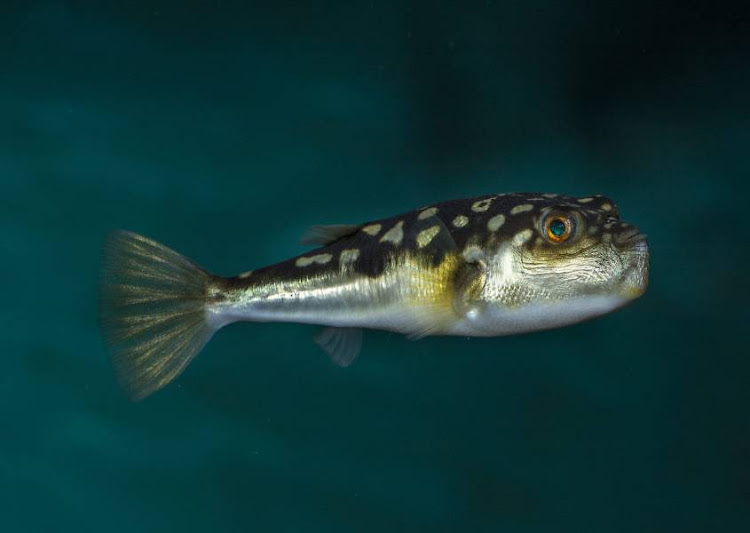
The City of Cape Town’s Coastal Management Department has confirmed that the fish mortalities in False Bay in the Muizenberg and Fish Hoek area is exclusively the evil-eye pufferfish (locally known as the ‘blaasop’). The City advises that beachgoers and dog walkers stay clear from the washed up fish as it carries the neurotoxin tetradotoxin and should not be eaten. The City’s Solid Waste Department has been busy with a clean-up operation since Monday, 22 March 2021, and will continue with this. To date, approximately 70 bags of fish weighing 200 kilograms have been removed. Read more below:
‘The City will continue monitoring all affected areas. We want to assure residents that the clean-up operations will be ongoing. The pufferfish is not for human or animal consumption, so we advise that all beachgoers and dog walkers avoid areas that may still need to be cleaned. Due to the reporting of a few puffer fish spotted at Fish Hoek beach, the Coastal Management team is now sweeping the area and will continue to monitor this beach as well,’ said the City’s Mayoral Committee Member for Spatial Planning and Environment, Alderman Marian Nieuwoudt.
The Department of Environment Forestry and Fisheries (DEFF) has reported and confirmed that there were no adverse (pollution) water conditions or red-tide toxins that may have caused this large scale mortality. The DEFF has indicated that here are, however, some interesting causes of past pufferfish mortalities recorded in South Africa and elsewhere. These include mass courtship; spawning and fighting which sees the male pufferfish inflate themselves, and then sometimes get rolled or blown out of the water by waves and/or wind. The City can therefore not confirm the exact cause of the mortalities.
Oceanographic and meteorological conditions contributing to the development of algal blooms or so-called ‘red tides’, low-oxygen conditions, large temperature differences (icy to warm water), washouts and mortalities of fish and invertebrates on the West Coast; False Bay and the rest of South Africa are monitored and tracked by the National Oceans and Coastal Information Management System (OCIMS), a partnership between DFFE, the Council for Scientific and Industrial Research (CSIR) and the South African Environment Observation Network (SAEON) .


